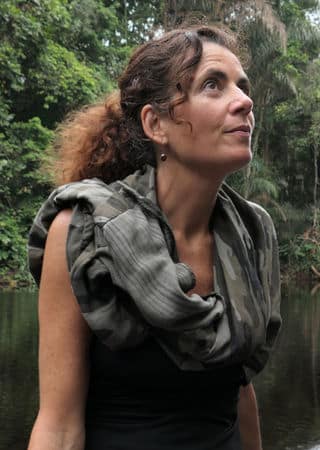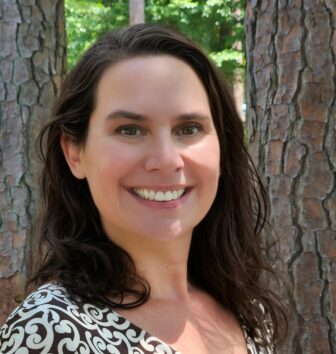

Friends of Bonobos sat down for a Q&A with author ELIOT SCHREFER to discuss his new children’s book about a bonobo orphan and how stories can inspire the next generation of conservationists.
Schrefer is a New York Times–bestselling author whose work has been called “dazzling… big-hearted” by the New York Times. A two-time finalist for the National Book Award for Young People’s Literature, recipient of the Stonewall Honor and the Printz Honor from the American Library Association, Schrefer brings both literary excellence and deep compassion to his storytelling.
His latest children’s book – ‘Lulu and the Others’ - explores why wild animals should never be kept as pets. It was inspired by research he carried out at Lola ya Bonobo sanctuary in the Democratic Republic of the Congo, where he spent time learning about rescued bonobos and the realities they face.
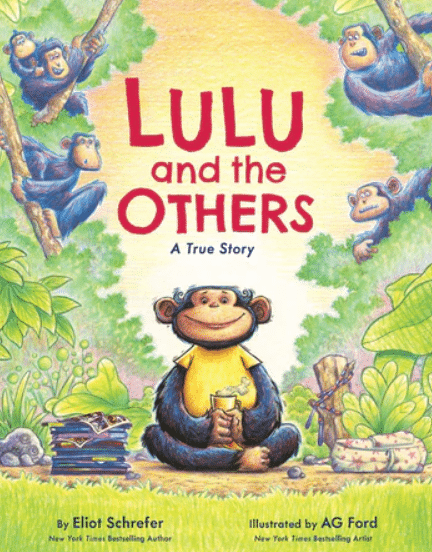
About the Book, ‘Lulu and the Others’
FOB: What inspired you to write a children’s book about bonobos and why now?
SCHREFER: I was so taken by the story of Mimi, one of the bonobos I met at Lola. She’d been raised by humans, and as a being who shares 98.7% of her DNA with us, she’d very naturally assumed she was human. But then her family brought her to Lola, and she had to learn that she was another species entirely. It was a rough transition period for her, and she cried by the fence for two weeks, begging to be released. She eventually came around to her fellow bonobos, and became the sanctuary matriarch. It’s such an inspiring tale of resilience and finding out who you are, and I wanted to share it with young readers.
FOB: Your book carries a clear message that wild animals should not be kept as pets. Why was that an important theme for you?
SCHREFER: Social media is clogged with images of adorable baby primates in all the wrong places—baby carriages, roadside zoos, private ownership. What happens when the cameras are off is heartbreaking. Once they grow into their strength, they’re imprisoned or given to medical research, or they die of loneliness. When I talk to schools, I emphasize that it’s right that we love wild non-human animals, but the greatest act of love is to give them what’s in their interest, not ours. They belong among their own kind.
Social media is clogged with images of adorable baby primates in all the wrong places—baby carriages, roadside zoos, private ownership. What happens when the cameras are off is heartbreaking. They belong among their own kind.
FOB: How did you approach telling a complex conservation issue in a way that children can understand and connect with emotionally?
SCHREFER: Lulu’s story struck me as being so similar to a kid’s experience of the first day of school. You’ve been raised by your family, and you come to know them, and suddenly you’re thrown into an intimidating new place where the other kids are scary and unpredictable and you have to learn a whole new set of rules. I think Lulu’s journey to learning who she is in a new world has a natural resonance for any six-year-old.
FOB: How does this book for children fit into your broader body of work and your interest in animals and conservation?
Human stories are only one kind of story. The non-human world has so much to tell us, and can make for such emotionally compelling stories. Whether it’s for adults or young people, my heart always leads me to tales that ask us to look beyond our own species and at the broader world. Whether it’s a kid’s book like The Animal Rescue Agency or a sci-fi book for older readers like The Darkness Outside Us, I’m really interested in stories of the more-than-human.
FOB: Can you tell us a bit more about the illustrator?
SCHREFER: I was so glad when my editor proposed AG Ford to illustrate! He’s the illustrator of the hugely popular Construction Site series, among many other wonderful works. We wanted someone who would bring vitality, energy, and some whimsy to Lulu’s story. I think he absolutely nailed it.
Schrefer’s Visit to the Bonobo Sanctuary
FOB: You visited the Lola ya Bonobo sanctuary in the Democratic Republic of the Congo. Tell us more about that experience.
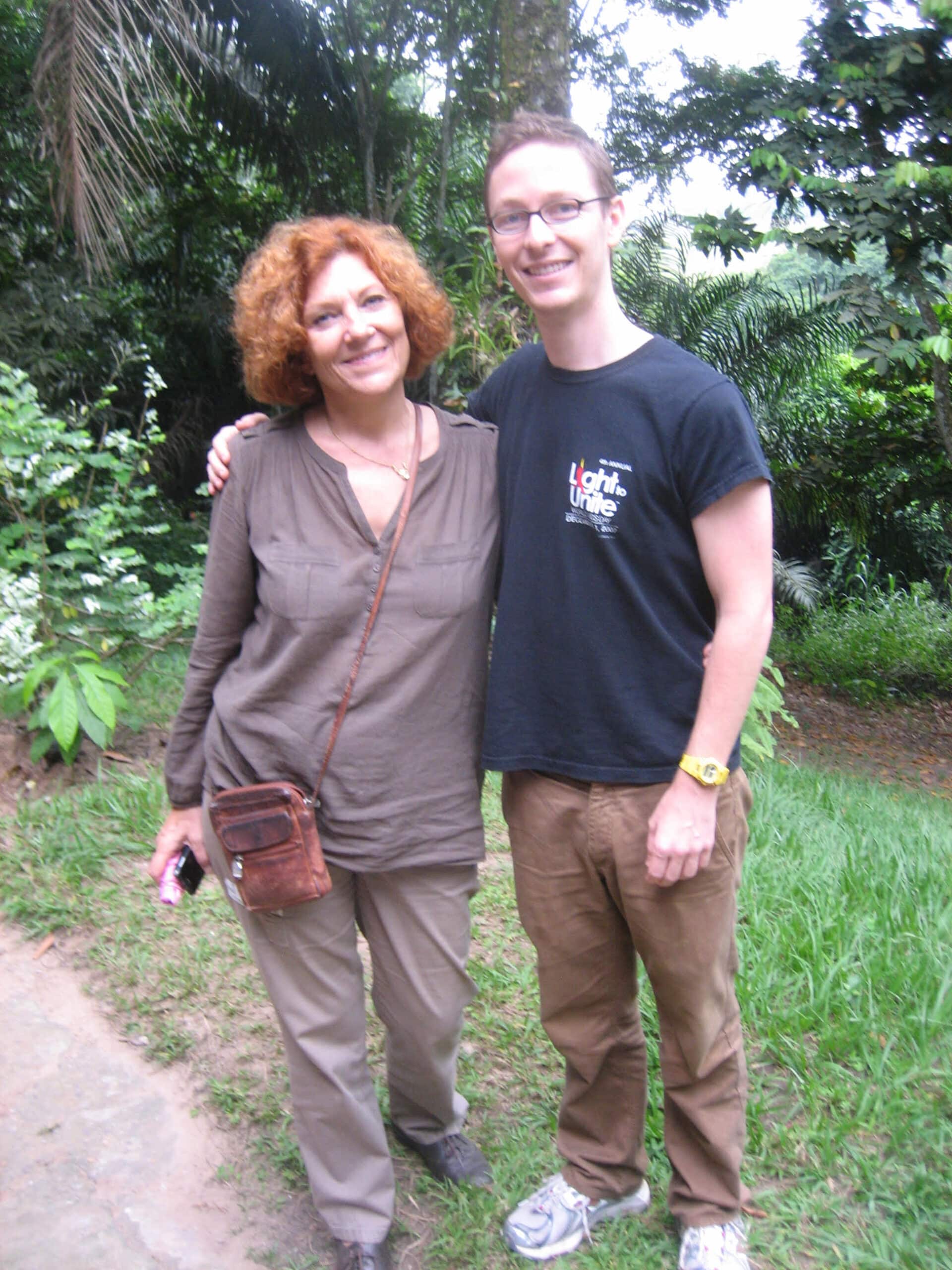
SCHREFER: I was apprehensive at first. I’d never been to DRC, and the state department warnings about traveling there made me think twice. The sanctuary is so wonderfully run, though, and I settled in and got comfortable the moment I passed through the front gates. I’d spend the mornings writing outside the nursery, then I’d go for walks around the premises, observing the bonobos and taking notes. One bonobo, Sake, was especially curious and would come find me while I was taking notes. She’d watch me watching her. She was my favorite of the adult apes.
FOB: How did seeing rescued bonobos firsthand shape the way you wrote this children’s book?
SCHREFER: The main lesson I learned during my in-person research was that there’s no one way a bonobo acts. They all have massively different personalities. Some are introverts, quietly hanging onto their surrogate mothers, while others are total rapscallions. Meeting such a variety of apes forced me to broaden my understanding not just of their capabilities but of the diversity within their own bonobo society.
I learned during my in-person research that bonobos all have massively different personalities.
FOB: Was there a moment during your visit that changed how you think about human–wildlife relationships?
SCHREFER: One young orphan had recently arrived, and he was so emaciated that he couldn’t eat his breakfast with the other orphans, because he wouldn’t get enough to eat. Once I’d passed quarantined so we could be sure I wouldn’t get him sick, we would have breakfast together, just the two of us. He loved peanuts especially, and would spend time studying each one before consuming it.
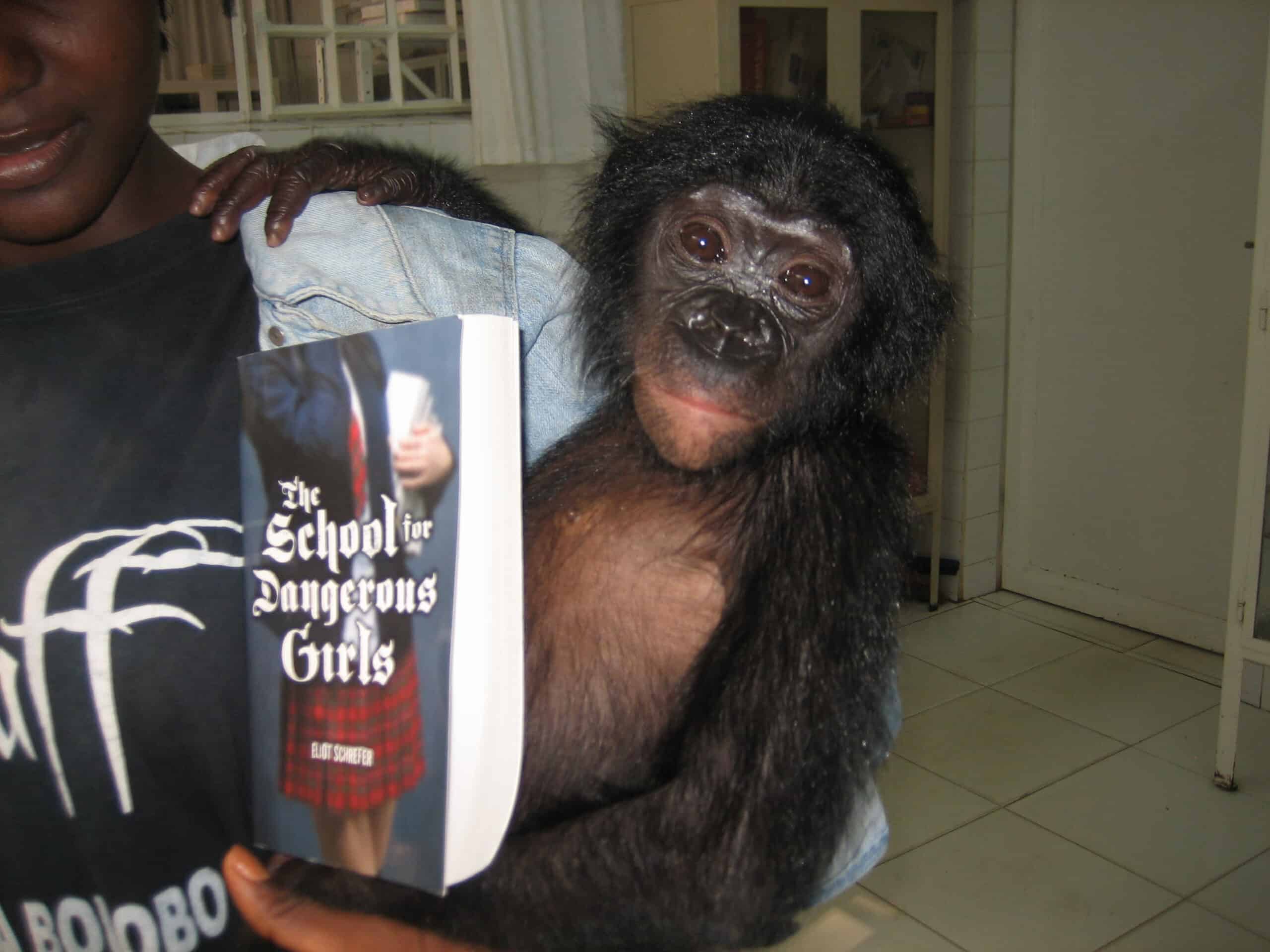
The other bonobos didn’t do that, it was just his way of eating his peanuts. He’d lost everything, seeing his family killed in front of him before being sold in a marketplace and finally coming to safety. He was going to take his time enjoying his peanuts. That was something he could control. It was a very moving moment, and said a lot to me about the effects of trauma on both humans and bonobos.
Getting to Know Bonobos
FOB: For readers who may be meeting bonobos for the first time: what makes them unique among great apes?
SCHREFER: Bonobos are our closest living relatives, along with chimpanzees, but they are strikingly different in behavior. They are known for their empathy, cooperation, and strong social bonds, often using communication and affection to resolve conflict rather than aggression. In bonobo communities, females play a leading role, and relationships are built on trust and connection. Watching bonobos interact is similar to watching humans; they comfort one another, share food, and show deep curiosity about their world.
FOB: Why are bonobos particularly vulnerable to the pet trade and illegal wildlife trafficking?
SCHREFER: Bonobos are only found in the Democratic Republic of the Congo. Habitat loss, conflict, and poverty in the region make them especially vulnerable to poaching and trafficking. Baby bonobos are sometimes taken from the wild to be sold as pets, but this almost always means their mothers and other members of their family group are also captured or killed in the process.
Being removed from their families can cause deep trauma and stress. At Lola ya Bonobo, rescued bonobos are provided care, love, and affection. They are raised in hope they can be released back into the wild. Protecting bonobos in the wild and stopping the illegal wildlife trade is essential if this species is to survive.
How to Get Involved
FOB: How can parents or educators share this story with their children/students?
SCHREFER: My favorite thing about picture books is that they are community acts: parents reading to children, children reading back to their parents, teachers and librarians gathering everyone on the carpet to travel somewhere far away in the pages of a book. They’ll pretend they don’t, but even middle-schoolers and high-schoolers love being read to! (And if you’d like me to Zoom in and meet your students and talk about the story of Lulu, please reach out to me on my website. If you buy the book through your local bookstore, just email me through my website and I’d be happy to mail you a signed and personalized bookplate.)
FOB: What can families do after reading your book to help protect bonobos and other wildlife?
SCHREFER: Check out Friends of Bonobos together! There’s so much to learn about our closest relatives. I’ve known plenty of schools who started a bonobo club, doing bake sales and car washes to support a young orphan at the sanctuary. It’s a great way for kids to get involved.
FOB: Is there a message you’d like to share directly with the Friends of Bonobos community and the people who support bonobo protection in the DRC?
I’m so grateful to you all! Bonobos are still the only ape species that most people can’t name, and they need their visibility raised, and you’re doing so much to help that to happen by supporting Friends of Bonobos. If there’s any way that occurs to you that we can be better allies together, please just reach out!