

Why We Mourn the Loss of Conservation Icons
For decades, three extraordinary women changed not only the course of conservation, but the way we understand ourselves. Sometimes referred to as “The Trimates,” Jane Goodall, Biruté Galdikas, and Dian Fossey, spent decades studying primates in the wild. Their research collectively helped reveal that apes (chimpanzees, orangutans, and gorillas specifically) are not so different from us: they have personalities, families and emotions. As we mourn the recent losses of Dr. Goodall and Dr. Galdikas and remember the earlier loss of Dian Fossey, we are reminded that their greatest legacy is not only what they discovered about the single species they were researching, but the interconnectedness of wildlife, communities, and ecosystems.
Through years spent in remote forests observing great apes, these three women inspired generations to see conservation as something greater, encouraging all of us to play a role in protecting the natural world.
The Voice of Patience and Hope
“You cannot get through a single day without having an impact on the world around you. What you do makes a difference, and you have to decide what kind of difference you want to make.” – Jane Goodall
Dr. Jane Goodall’s voice has always had a calming urgency. A somewhat melodic, motherly encouragement that has gently pushed humanity to appreciate the natural world, suggesting ways to coexist. Maybe it was her years spent in the remote Gombe forests, following and observing chimpanzee behavior that led to her placid, sage advice. Mastering patience, she sent letters and telegrams that took days or even months to reach their destinations.
In one of her most famous letters to paleoanthropologist, Louis Leakey, Dr. Jane Goodall mentioned observing chimpanzees making and using tools. He responded with a telegram stating, “Now we must redefine tools, redefine Man, or accept chimpanzees as humans.” Goodall’s patience and observations had changed our understanding not only of chimpanzees, but of ourselves. She would go on to discover more than just behaviors, proving that animals have individual personalities and emotions – ultimately transforming the philosophy of science. On October 1, 2025 the world mourned the loss of Dr. Jane Goodall, who died at the age of 91.
Her research continues today and is one of the longest ecological studies on the planet. The Jane Goodall Institute and its Roots and Shoots global youth program continue her important work, not just with chimpanzees, but wildlife, conservation, and community development. Her voice is also a powerful legacy. It will always serve as a reminder that we should bring hope and know each one of us has a role to play.
“What you do makes a difference, and you have to decide what kind of difference you want to make”. – Jane Goodall
Biruté Galdikas and Orangutans
Just months later, on March 24th, 2026, the world lost another great primatologist, Dr. Biruté Galdikas, known for her work with orangutans, primarily in Borneo. Like Goodall, Galdikas also exuded optimism even during hardships. Her research in Borneo was similarly in tough conditions: swamps, insect bites, and long days navigating the rainforest were only the beginning hurdles. Deforestation and habitat fragmentation sped up at alarming rates during her decades in the field. After fifty years, she wrote, “I will not stop fighting for orangutans and their forest homes. I hope you will fight with me.” Losing Dr. Galdikas is another reminder that the work is far from over.
I will not stop fighting for orangutans and their forest homes. I hope you will fight with me.” – Dr. Galdikas
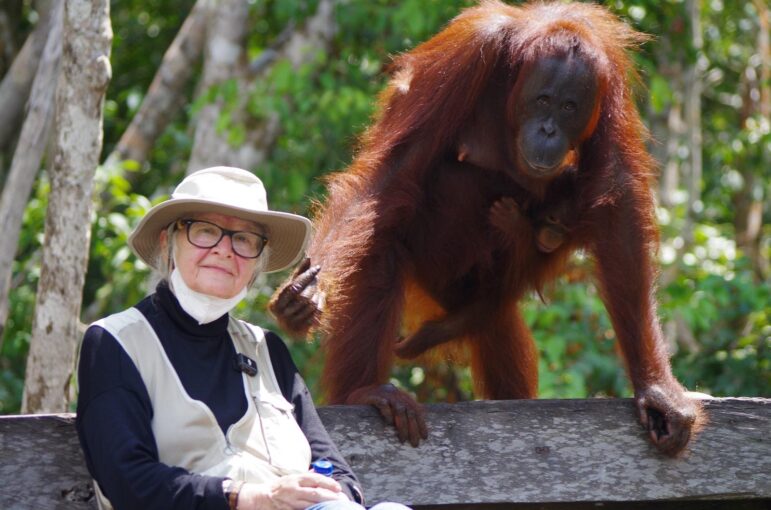
Decades prior, Dian Fossey, who focused primarily on mountain gorillas, was sadly killed by poachers. Like Dr. Goodall and Dr. Galdikas, Dian Fossey chose to call the forest home. For her, this would be an area of Rwanda bordering the DRC and Uganda. While the mountain gorillas often traverse this area knowing no boundaries, humans often refer to it as “impenetrable.”
Beginning in 1967 with the founding of the Karisoke Research Center in Rwanda, Fossey spent nearly two decades documenting gorilla behavior, social structures, and communication, revealing fundamentals about an animal that had largely been misunderstood. She changed the gorilla’s image from that of a vicious King Kong to the gentle giant we think of today. Where Goodall showed us the complexities of chimpanzees and Galdikas unlocked the solitary world of orangutans, Fossey was able to shift our fear of a species into empathy.
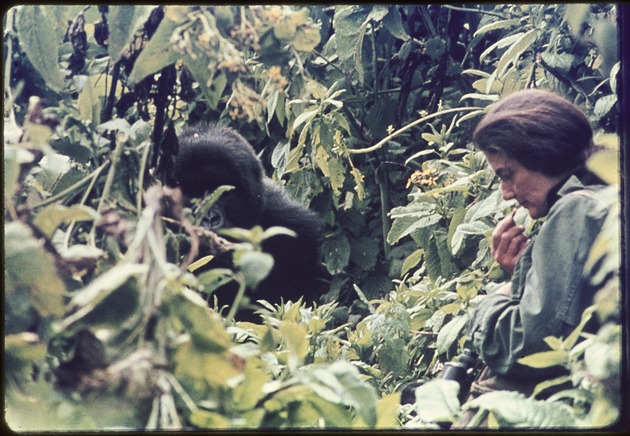
Source: www.ufdc.ufl.edu
The Legendary Trimates
Together, they completed a picture of great ape life that continues to shape conservation science to this day. As pioneering field researchers, these three women unveiled discoveries about primates that have not only helped better our understanding of the natural world, but also of humanity.
“When you realize the value of all life, you dwell less on what is past and concentrate more on the preservation of the future.” – Dian Fossey
It is easy to call them conservation icons, women who will not easily be forgotten. But losing them feels like a greater weight than just losing an individual. We lose what they stood for, what they believed in, and what they refused to give up on. Each of them, in their forest, demonstrated something that no report or policy could. Protecting any single species, whether a primate, a lizard, a frog, or even humans, means embracing a relationship with nature. Saving a single species is not just about one animal; it’s about communities, biodiversity, and sustained commitment.
Saving a single species is not just about one animal; it’s about communities, biodiversity, and sustained commitment.
Bonobo Conservation
At Friends of Bonobos, that belief is central to our work. Like the Trimates, we are protecting something much larger: entire ecosystems, communities, and a vision of what humanity’s relationship with the natural world can look like. The Congo Basin rainforest that bonobos call home is one of the most biodiverse and carbon-rich ecosystems on the planet. To protect bonobos, is to protect the forest. To protect the forest is to protect the climate, communities, and ultimately, ourselves.
To protect bonobos is to protect the forest. To protect the forest, is to protect the climate, and ultimately, ourselves.
Grieving Icons
That grief we feel when we lose a conservation icon is partly a fear that such belief and conviction is rare, and a reminder that it must not be.
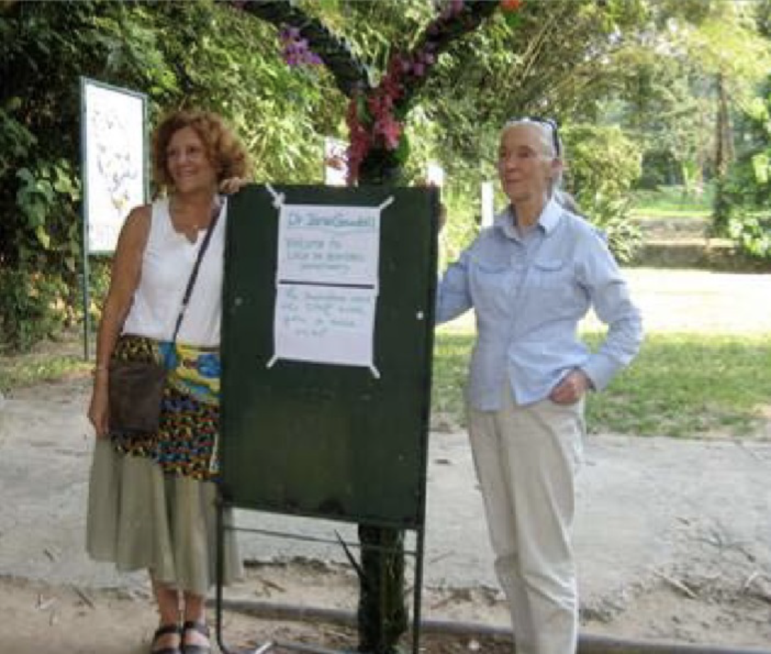
This is something our own founder, Claudine André, and her daughter and our current leader, Fanny Minesi, understand deeply. André founded Lola ya Bonobo, the world’s only bonobo sanctuary, and has spent decades doing exactly what the Trimates modeled: refusing to abandon the animals, the place, and the people that need her most.
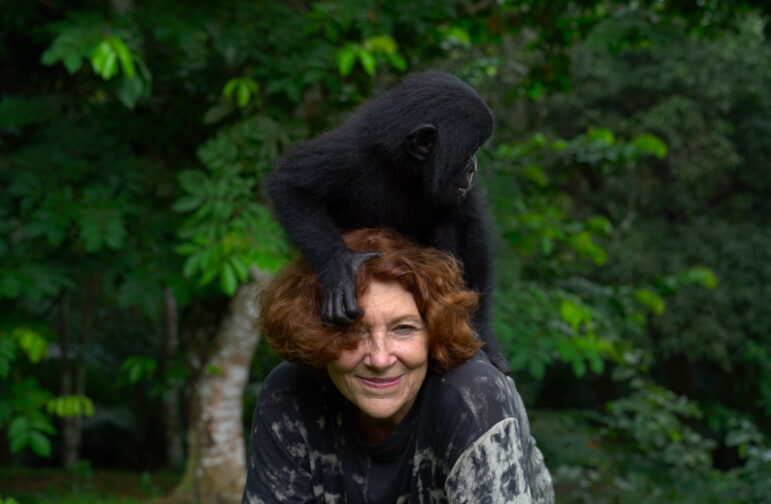
Minesi, who leads our work today, has extended that commitment to the wild, helping to expand protected areas and building conservation by including local communities. As Minesi has said, bonobos are led by females who share power, and she believes we should learn from that. In that spirit, Friends of Bonobos/Les Amis des Bonobos du Congo (FOB/ABC) is not just an organization that protects one particular species. It is proof that the model the Trimates pioneered, patient, community-rooted, and female-led, still works and still matters.
“What I’m doing here is for you. We have just one planet. Just one. It is urgent that we do better.” – Fanny Minesi
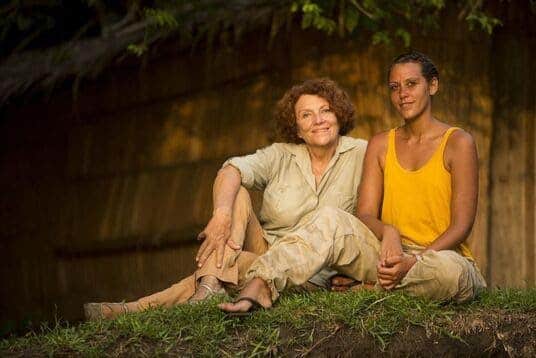
Collectively, we are grateful for the strong female leadership of Dr. Goodall, Dr. Galdikas, and Dian Fossey that continues to guide the work of FOB/ABC. While we mourn the loss of these iconic women, their dedication and voices remind us we all have a role to play. Claudine André and Fanny Minesi have each dedicated their lives to bonobos with the same quiet, unrelenting conviction, working toward a future where bonobos and people can thrive together.