

Eight ways Claudine André’s work with bonobos has changed the world.
1. Claudine rescued the first bonobo at Kinshasa Zoo.
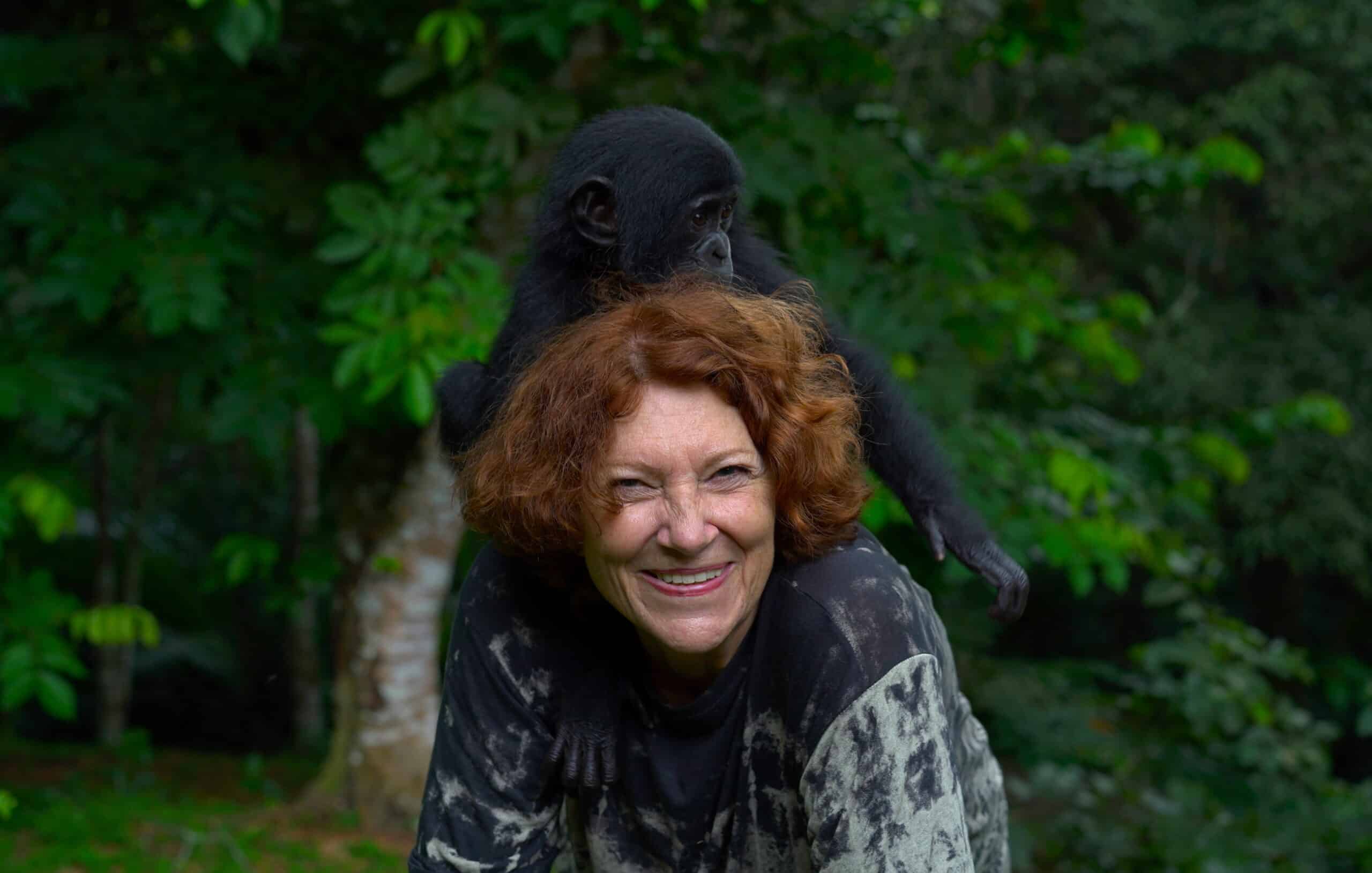
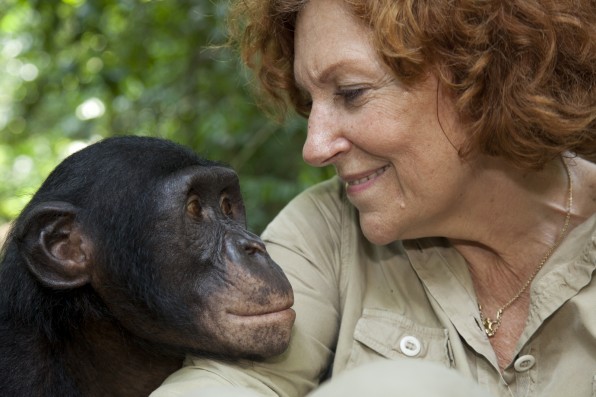
Over 30 years ago, when volunteering at the Kinshasa Zoo, a sick bonobo named Mikeno was dropped off at the zoo. She was warned that he would not survive, but she accepted the challenge to save him, and spent day and night caring for the baby. She provided him with nutritious food and medical care. She also provided him with love and affection, discovering that it was vital for all bonobos to survive. Mikeno survived and stayed under her care for years to come.
As Claudine said, ‘The Zoo director warned me not to pour my heart into it. It’s not an easy animal to keep in captivity. But it was like a second challenge to me – not only to save the zoo, but also to save this bonobo.’
2. Amid the Congo’s civil wars, Claudine looked for a refuge for bonobos.
After Mikeno’s survival, word spread that Claudine knew how to rescue bonobo orphans and people began bringing them to her. She founded Les Amis des Bonobos du Congo (ABC) so she could give them a future. She also wanted to give them a suitable refuge, and traveled by canoe to remote locations in search of one, despite the country’s civil wars and risk to her personal safety. That work eventually led to the opening of Lola ya Bonobo, the world’s only sanctuary dedicated to orphaned bonobos, in 2002.
3. Claudine helped establish ABC as a female-led conservation organization.
Like the matriarchal bonobos we protect, our organization is female-led, with incredible women across three continents carrying Claudine’s work forward. Under Claudine’s leadership and now her daughter Fanny’s, the organization values the very qualities bonobos model for us: sharing, caring, and cooperation. You can learn more about them here.
4. Under Claudine’s leadership, the first successful reintroduction of bonobos to the wild took place at Ekolo ya Bonobo Community Reserve in 2009.
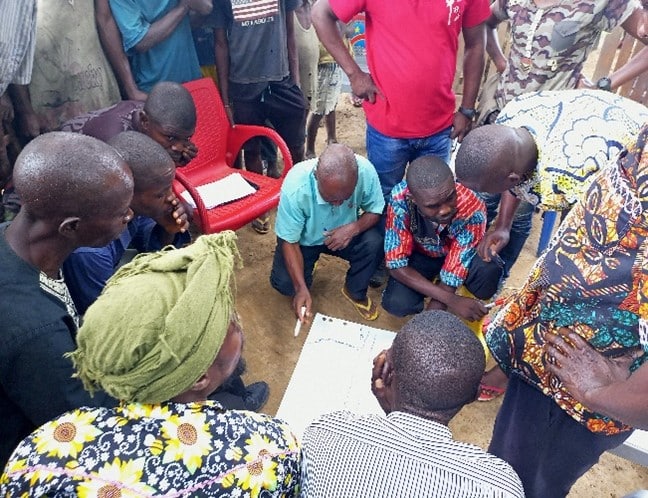
To establish Ekolo, Claudine spent time working alongside the local Ilonga-Mpôo community, listening to their concerns and negotiating an agreement that would protect the bonobos and respect the community’s ancestral connection to the land. Reflecting on the process, Claudine wrote:
‘At that very moment I thanked the bonobos from the bottom of my heart for having brought me on this adventure that allowed me to rediscover the depths of the Congo, the hospitable people, the beautiful scenery and the primary rainforest of the Congo Basin. Yes, here in the midst of this black mirror of water, sliced by our pirogue, I was experiencing a part of my paradise.’
Read about the process for negotiating for Ekolo ya Bonobo in this letter from Claudine.
Today, Ekolo offers these bonobos a protected forest of more than 120,000 acres. A second reintroduction took place in 2022. Remarkably, ten bonobos have been born at Ekolo, a monumental milestone for the survival of this endangered species.
5. Bonobos are protected by the people who know them best.
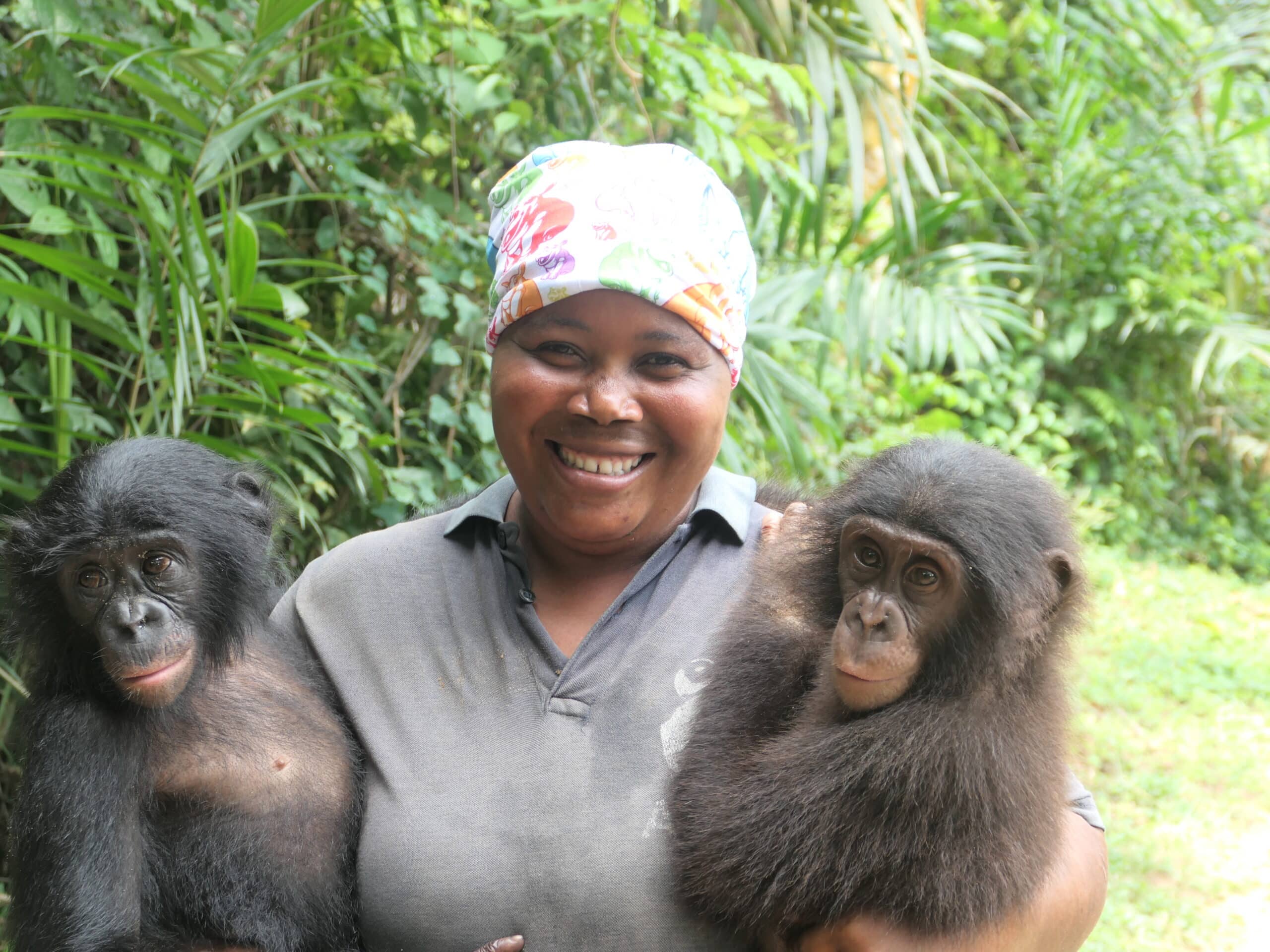
From the beginning, Claudine understood that bonobos can only be protected by the people who share their home. Today, ABC’s team is primarily Congolese, from the substitute mothers who raise orphaned bonobos to the leaders who run Lola ya Bonobo and help protect Ekolo ya Bonobo. Together, they work with communities to ensure their long-term protection.
6. Claudine’s work has helped to not only protect bonobos but also the forests where they live, and all the other wildlife that call these areas home.
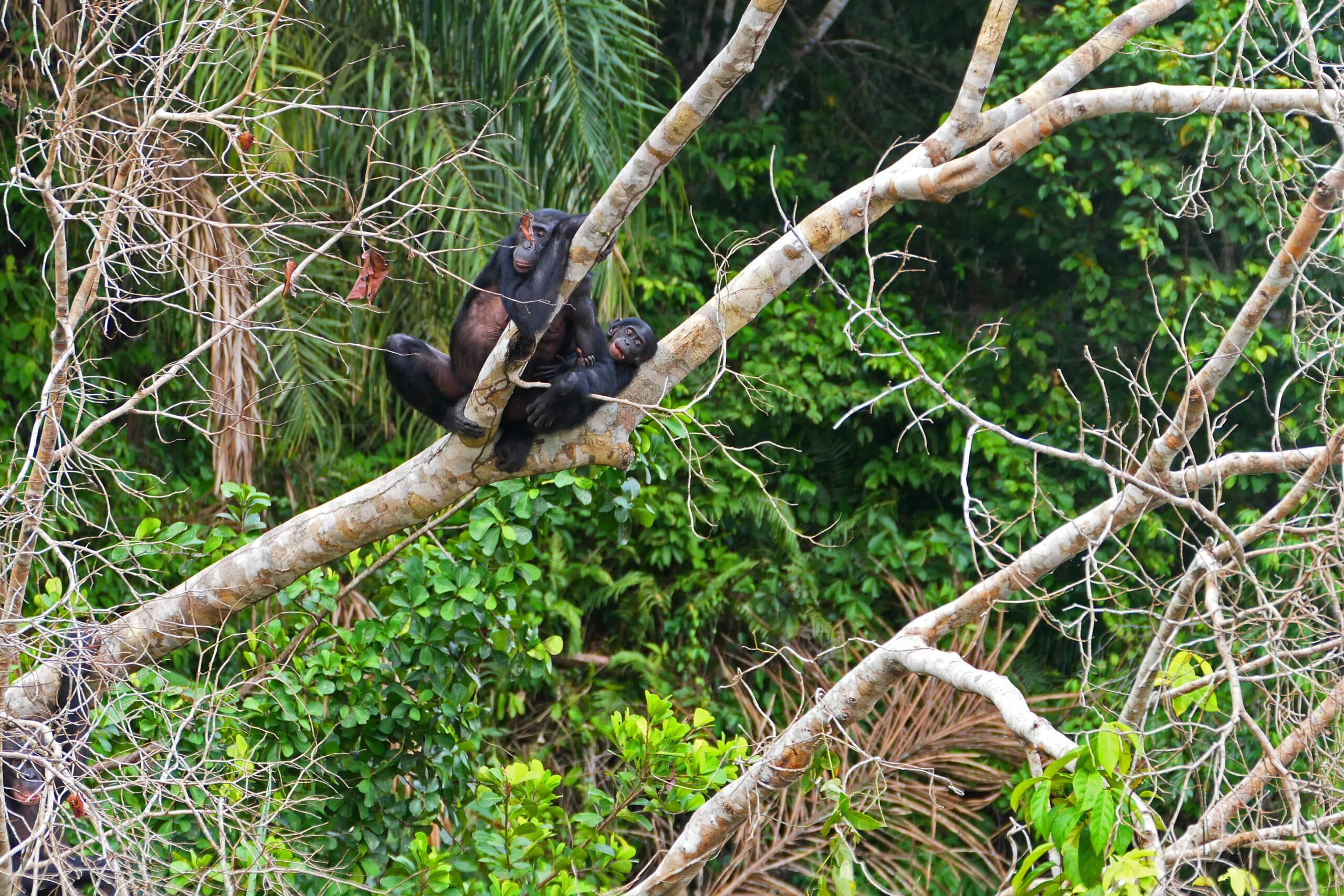
The Congo Basin Rainforest is one of the most biodiverse and carbon-rich ecosystems on the planet, making it crucial for our planet and the communities that depend on the forest.
7. Claudine turned a little-known ape into a global cause.
When Claudine started her work, very few people knew what a bonobo was. She changed that through books for children and adults, documentaries, and dedicated conservation education programs in the DRC that reach thousands every year.
When she worked with the crew of the film, ‘Bonobos: Back to the Wild,’ she spent several weeks alongside wild bonobos in the forest of the Maringa-Lopori-Wamba Landscape. She described the experience in another letter:
‘These were unforgettable moments for me! Sitting on the ground with the tracker, surrounded by the entire party of bonobos who were just a few meters away, we shared very special moments, like we do at Lola!’
8. Claudine’s work has been recognized around the world.
Claudine’s work has gained global recognition, with honours including the Badham-Evans Award for Women’s Commitment to Wildlife (UK), the Prince Laurent Foundation Prize (Belgium), and the National Order of Merit (France). She was also nominated for the Indianapolis Prize in 2023, often referred to as the ‘Nobel Prize of Conservation.’
Claudine’s work has made extensive strides across the conservation world, and her resilience and commitment to bonobos has given the species a future.
Happy Birthday, Claudine, and thank you for everything!